
Short-Term Let Registration 101: A Beginner's Guide to Mastering the 2026 Rules

Your 2026 Compliance Checklist
To master the 2026 rules, you must treat your property like the business it is. The registration process will require you to demonstrate that your property is safe and legal. While this may seem daunting to a beginner, most of these requirements are standard for any responsible property management company.
Here is the essential documentation you will need to have ready:
Fire Risk Assessment (FRA): A written assessment specifically tailored to short-term guests, including fire doors and interlinked alarms.
Gas Safety Certificate (CP12): Required annually if there is a gas supply to the property.
Electrical Installation Condition Report (EICR): A professional check of the property's wiring, usually required every five years.
Energy Performance Certificate (EPC): While the threshold for STLs has been a point of debate, aiming for a Grade C or above is best practice for future-proofing.
Specialist Insurance: Standard home insurance is invalid for short-term lets. You must have public liability and guest-specific cover.
The Registration Number: Once obtained, this must be displayed on every listing platform.
The Cost of Non-Compliance
The government has introduced teeth to these regulations. Failure to register or providing false information can lead to:
Fines of up to £5,000 for non-compliance.
De-listing from platforms: Airbnb, Booking.com, and VRBO are now legally obligated to remove any property that does not display a valid registration or license number.

Regional Disparity: England vs. Wales vs. Scotland
While the trend is toward stricter oversight, the implementation varies across the borders. Understanding these nuances is key for investors with multi-regional portfolios.
England: Focuses on the "Register and Use Class" model. It is designed to be lighter on administration than Scotland, focusing primarily on data collection and basic safety.
Wales: Is taking a more tax-linked approach. From October 2026, registration will be mandatory. Furthermore, properties must meet the 182-day let threshold to qualify for business rates; otherwise, they may face significant council tax premiums.
Scotland: The most stringent. Investors must apply for a full license before they can even advertise. The process involves background checks and neighbor notification.
Regardless of the region, the "informal" era of short-term letting is closing. For the professional investor, this "disparity" in rules is actually an opportunity to consolidate market share by being the most compliant and well-managed provider in the area.
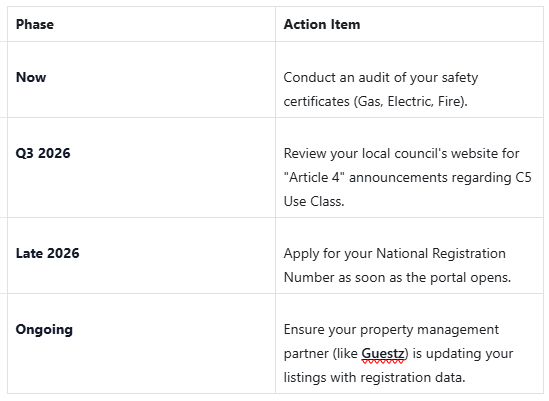
How to Prepare: A Timeline for Investors
If you are looking to enter the market or transition an existing buy-to-let into serviced accommodation, follow this timeline to ensure a smooth transition into the 2026 landscape.
Why Professional Management is the Solution
The common denominator in all these changes is accountability. For a hands-off investor, the administrative burden of tracking registration renewals, managing safety certificates, and navigating planning laws can be overwhelming.
This is where Residential Estates and our short-term management brand, Guestz, provide a competitive advantage. We handle the entire property cycle: from identifying high-yield investment opportunities to managing the day-to-day compliance and guest stays.
Our team is already integrated with the new registration requirements, ensuring that your property remains compliant, your listings remain active, and your returns remain robust.
Conclusion: A Future Built on Stability
The 2026 short-term let rules represent a structural adjustment in the UK property market. While the transition may precipitate some short-term administrative work, the underlying strength of the serviced accommodation sector remains undeniable. Demand for high-quality, flexible stays continues to outpace supply, especially in emerging hubs and heritage cities.
By embracing these regulations, you are not just ticking a box; you are future-proofing your investment against future policy shifts and positioning yourself as a premium provider in a professionalised market.