
As we navigate the midpoint of 2026, the UK property investment landscape is undergoing a notable transition. For the seasoned investor, the "popular narrative" often oscillates between extreme optimism and sensationalist warnings about the death of the private rented sector. However, a measured analysis of the current data suggests that the market is not failing; rather, it is professionalising.
The traditional buy-to-let (BTL) model, long the cornerstone of domestic portfolios, now faces a suite of regulatory adjustments that require a more nuanced approach. In contrast, the aparthotel and serviced accommodation (SA) sector has emerged as a resilient, high-yield alternative that circumvents many of the frictions inherent in residential tenancies.
For those looking to refine their 2026 strategy, the choice between these two paths depends on one's appetite for yield versus stability, and a clear understanding of the tax and regulatory frameworks now in play.
The Traditional Buy-to-Let: Navigating the 2026 Regulatory Shift
It is important to acknowledge that the traditional buy-to-let model is currently navigating its most significant legislative overhaul in decades. With the full implementation of the Renters’ Rights Act 2026, the industry has had to adapt to the abolition of Section 21 "no-fault" evictions and the transition to mandatory periodic tenancies.
While some headlines have characterised these changes as "unpalatable" for landlords, a long-term lens reveals a different story. The move toward periodic tenancies and enhanced tenant rights is a readjustment designed to improve the quality of the UK rental stock: a factor that ultimately supports property values. Nevertheless, these changes do introduce a degree of cash-flow uncertainty. Landlords can no longer rely on fixed-term contracts to guarantee occupancy, and the process for regaining possession under Section 8 now requires a more robust, evidence-based approach.
Furthermore, the continued impact of Section 24 (the restriction on mortgage interest tax relief) remains a factor for individual landlords. When combined with the 2026 Stamp Duty Land Tax (SDLT) surcharges for residential purchases, the barrier to entry for high-net-worth individuals in the traditional BTL space has undeniably risen.

The Rise of the Aparthotel Model: Yield and Resilience
While traditional BTL faces these regulatory headwinds, the aparthotel and serviced accommodation model has reasserted itself as a primary vehicle for capital growth and superior income.
The fundamental appeal of the aparthotel model lies in its operational structure. Unlike residential buy-to-lets, most aparthotels are classified under C1 commercial use. This status is significant because it typically places the property outside the scope of the Renters’ Rights Act. Because the occupants are guests rather than tenants, the complexities of periodic tenancies and the ombudsman requirements of the PRS (Private Rented Sector) do not apply.
Yield Comparisons: Data over Drama
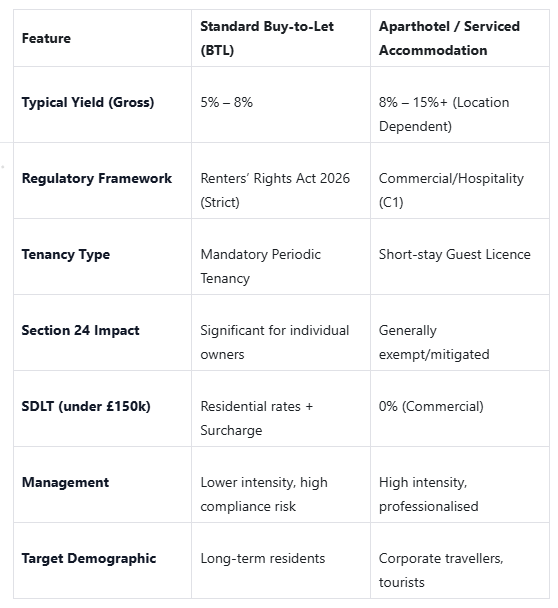
When we look at the data, the disparity in returns is clear. Nationally, standard buy-to-let gross yields have stabilised at approximately 5.8% to 7.2%. While these figures are robust by historical standards, they are often eroded by the higher operational costs of 2026 compliance.
In contrast, prime location serviced accommodation: particularly within the North West property boom: continues to deliver net yields in the 8% to 15% range. This performance is driven by the flexibility of nightly rates, which allow investors to capture the premium associated with short-term business and leisure stays, effectively shielding the investment from the limitations of annual rent increase caps.
The "C1" Advantage: Tax Efficiency and SDLT
One of the most compelling arguments for the aparthotel model in 2026 is the tax treatment of commercial assets. Professional investors often favour the C1 status for its inherent efficiency:
Section 24 Exemption: Unlike residential property, commercial and "furnished holiday let" style operations often allow for the full deduction of mortgage interest as a business expense, providing a significant shield for your tax bill.
SDLT Savings: Currently, commercial property purchases benefit from a different Stamp Duty scale. For instance, commercial acquisitions under £150,000 attract a 0% SDLT rate, a stark contrast to the 5%+ surcharge often seen in the residential sector for second homes.
Capital Allowances: Investors in the aparthotel space can often claim capital allowances on "integral features" (such as heating, lighting, and air conditioning), which can be offset against rental profits, further enhancing the net return.
Management Intensity: From DIY to Professionalised Models
The primary "concession" of the aparthotel model is its management intensity. A traditional buy-to-let may require occasional oversight, but a serviced apartment is an operational business. Success depends on high occupancy, dynamic pricing, and impeccable guest service.
For the modern investor, the "DIY landlord" era is effectively over. The risk of litigation under the new Renters' Rights Act makes self-management of residential property increasingly precarious. Conversely, the complexity of short-term letting requires a professional touch.
This is where the shift to professional management brands, such as Guestz (Powered by Residential Estates), becomes essential. By integrating the "Stay" portion of the property cycle, investors can enjoy a truly hands-off experience. Professional management handles everything from platform marketing (Airbnb, Booking.com, and corporate portals) to 24/7 guest communication and maintenance, ensuring that the high gross yields of the aparthotel model translate into consistent net profits.

Comparison Table: 2026 Investment Outlook
Conclusion: Refining Your 2026 Portfolio
As we look toward the latter half of the year, it is evident that the UK property market remains fundamentally strong, underpinned by a structural shortage of quality accommodation. The perceived "crisis" in the rental sector is, in reality, a temporary reversal of the status quo that favours those who adapt.
For investors seeking stability and long-term capital appreciation with moderate yields, the standard buy-to-let in emerging hubs remains a solid choice. However, for those prioritising cash flow, tax efficiency, and an exit from the increasing pressures of the residential regulatory regime, the aparthotel model represents the most sophisticated path forward.
At Residential Estates, we believe the key to navigating 2026 is not to retreat from the market, but to embrace the professionalisation of the "living" sector. Whether through high-performing residential lets or the dynamic yields of Guestz-managed serviced apartments, the underlying strength of UK real estate continues to offer a robust haven for those with a long-term lens.