Beyond the Headlines: 5 Tell-Tale Signs a UK Town is About to Boom

In the world of property investment, there is a distinct difference between following the news and reading the tea leaves. By the time a location is featured in a "top ten places to live" list in a Sunday supplement, the smartest money has already moved in, renovated, and is likely looking for its next exit strategy.
As we navigate the landscape of 2026, the savvy investor knows that the real gains aren't found in the obvious; they are found in the overlooked. It is a fundamental truth of the market: "In the property world, the most profitable moves are rarely the most popular ones at the time. By the time a location is common knowledge among the general public, the 'early-bird' growth has often already occurred."
Spotting an "up-and-coming" area is not about guesswork; it’s about identifying specific, clinical markers of change. At Residential Estates, we spend our time looking beyond the sensationalist headlines to find the underlying structural shifts that precipitate a boom.
Here are the five tell-tale signs that a UK town is quietly preparing to outperform the market.
1. The 'Nervous System' Upgrade: Major Transport Infrastructure
Connectivity is the single most reliable predictor of capital growth. However, the trick is to invest when the plans are finalised and the ground is being broken, not when the first train pulls into the station.
Projects like the Northern Powerhouse Rail (NPR) are the perfect example. While the national narrative often gets bogged down in political delays, the reality on the ground is a massive redistribution of transport spending. Towns that were previously considered "commuter outposts" are being integrated into high-speed corridors.
Take Huddersfield or Doncaster, for instance. With significant investment in the Transpennine Route Upgrade and station modernisations, these hubs are seeing their journey times to Manchester and Leeds slashed. When a town’s "distance" to a major employment hub is measured in minutes rather than miles, the property prices inevitably reassert themselves to match that new accessibility.

2. The 'Anchor' Effect: Transformative Private & Public Projects
A single, massive project can act as a gravity well for an entire region. These are "Anchor Projects": developments so large they fundamentally change the economic identity of a town.
The most prominent example in 2026 is Eden Project Morecambe (formerly Eden Project North). For years, Morecambe was seen as a traditional seaside town, but the arrival of a £100 million+ eco-tourism destination is a game-changer. It isn’t just about the 750,000 projected annual visitors; it’s about the infrastructure that follows them: hotels, restaurants, and a permanent workforce needing high-quality housing.
As we’ve noted in our spotlight on Morecambe, these projects create a "scarcity premium" for local property. When the Eden Project opens its doors, the rental demand for both short-term lets and professional housing will likely far outstrip current supply.

3. The 'Tech Hub' Pivot: Moving Beyond Industrial Heritage
When a town starts trading its industrial chimneys for digital fibre, investors should pay attention. The "Tech Hub" pivot is a sign that the local economy is moving up the value chain, bringing with it higher wages and a more "recession-proof" demographic of tenants.
Barnsley is currently the poster child for this transition. Traditionally known for its coal and glass heritage, the town has pivoted aggressively toward the digital economy. The centerpiece of this is The Seam: Barnsley’s Digital Campus. By creating a dedicated space for tech start-ups and creative professionals, the local authority is attracting a demographic that previously would have headed straight for Leeds or Sheffield.
This shift in the employment mix is a leading indicator of rental growth. Professional tenants working in the digital sector are willing to pay a premium for high-specification urban apartments that offer the "Invest, Buy, Rent, Stay" lifestyle we champion at Residential Estates.
4. The 'Paper Trail' of Prosperity: Local Authority Spending
If you want to know where a town is going, look at its masterplan. "Regeneration" is often used as a buzzword, but the reality is found in the Towns Fund and Levelling Up allocations.
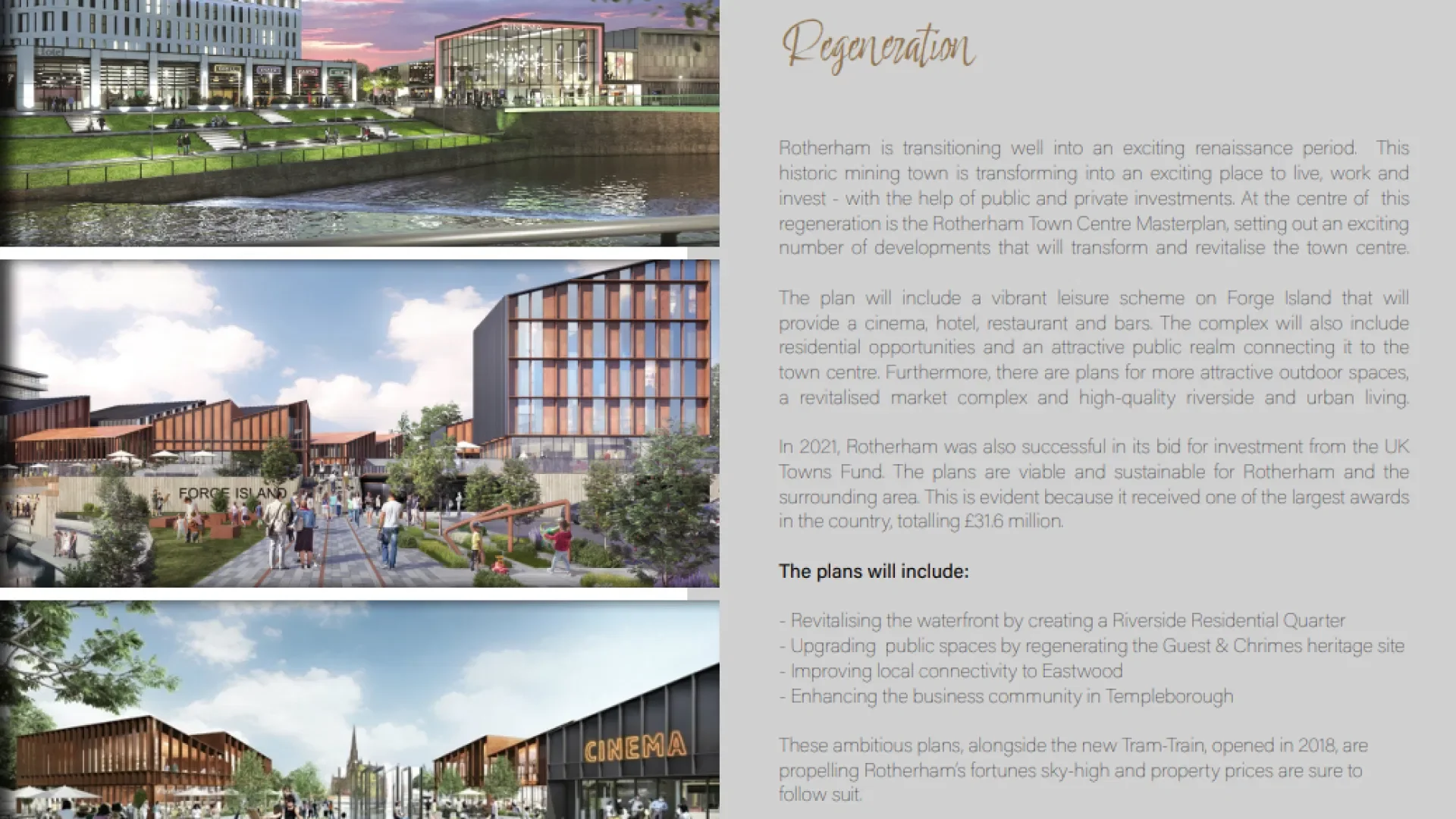
Towns that have secured significant government funding for high-street renewal, waterfront developments, or public realm upgrades are effectively having their "risk" de-risked by the state. When a council commits to a 10-year masterplan: like the waterfront regeneration in Rotherham or the city-centre upgrades in Blackpool: they are signalling to the private sector that the area is open for business.
For an investor, visible construction: cranes on the skyline and scaffolding on the high street: is a much more reliable signal than a broker’s promise. These masterplans create a sense of place that attracts further private investment, leading to a virtuous cycle of growth.
5. Cultural Revival: The 'Café Culture' Indicator
The final, and perhaps most nuanced, sign is the cultural revival. This is often the first "boots-on-the-ground" indicator that an area is turning a corner. It starts with the restoration of heritage buildings: like the Winter Gardens in Morecambe: and is quickly followed by the emergence of independent cafés, boutique shops, and creative studios.
This "gentrification" (though some find the word unpalatable) is a clear sign of shifting demand. When the creative class moves in, the professional class is rarely far behind. You are looking for areas where the "old world" charm of a town is being repurposed for a modern, urban lifestyle.
This cultural vibrancy reduces void periods and increases tenant retention. People don't just want a roof over their heads; they want to live in a place with character and community. Areas that successfully blend heritage with modern amenities, like Warrington or the creative quarters of the North West, offer some of the most stable long-term returns in the UK.
Conclusion: The Rational Path to Growth
Spotting the next property boom requires a departure from the "herd mentality." It requires looking at the data, the infrastructure, and the long-term economic shifts rather than the short-term market noise.
At Residential Estates, we pride ourselves on being that rational, expert voice. Whether it’s navigating the latest legislation or identifying the next regeneration goldmine, our goal is to provide the context that turns a "risky" move into a strategic investment.
The signs are there: you just need to know where to look. If you’re ready to look beyond the headlines and explore the "early-bird" opportunities in Barnsley, Morecambe, and beyond, get in touch with our team today.
Ready to Learn More?
Why not talk to one of our experienced Property Investment Consultants?
Whether you're looking to expand your portfolio or make your first investment, we make the process effortless. With expert guidance, a hands-off management approach, and access to high-demand rental markets, Residential Estates provides everything you need to succeed in property investment.
Get in touch today to explore our latest opportunities and start building a profitable, stress-free property portfolio.